

Prime Day has outgrown its 48-hour flash sale roots. Now a multi-day marathon, the event demands a strategy that balances long-term pacing with operational precision. To help you stay ahead of the curve, we’ve gathered the Amerge Prime Day Toolkit – a collection of proven strategies from our Client Strategy, Sponsored Ads, DSP, and Selling Partner teams. Whether you are navigating the “Traffic vs. Conversion Paradox” in the EU or fighting for retention in the US, these insights will ensure your brand is Prime Day ready.
1. The Strategic Foundation: The Lead-In Phase
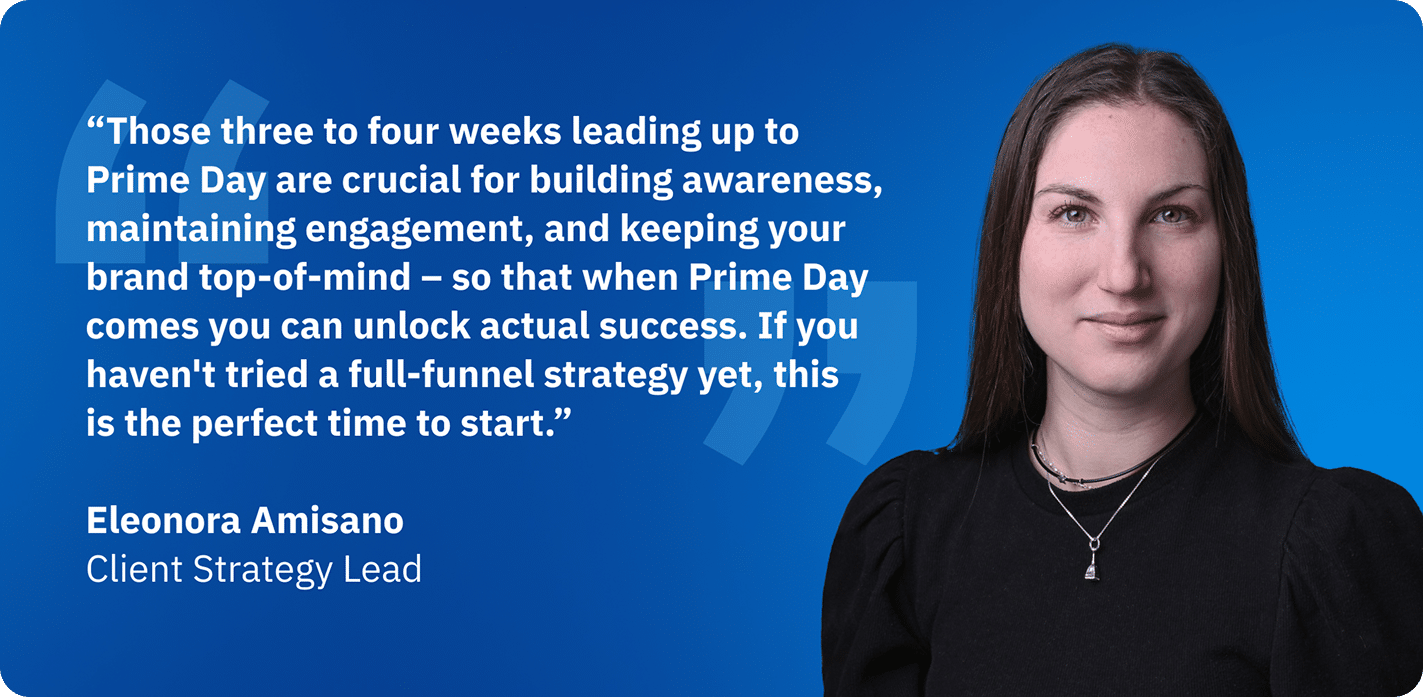
The first tool in your kit is perspective. Our Client Strategy Lead, Eleonora Amisano, reminds us that the event doesn’t start on Day 1; it starts weeks earlier.
“When working in the Amazon ecosystem, entering Q2 means only one thing: Prime Day is just around the corner! A common mistake many advertisers make is concentrating all their budget and resources only on the deal days, overlooking the fact that the lead-in phase is just as important as the event itself. Those three to four weeks leading up to Prime Day are crucial for building awareness, maintaining engagement, and keeping your brand top-of-mind – so that when Prime Day comes you can unlock actual success. If you haven’t tried a full-funnel strategy yet, this is the perfect time to start.”
Eleonora Amisano, Client Strategy Lead
2. The Pacing Blueprint: Navigating the Multi-Day Event
Last year, Prime Day officially expanded to four days. Based on that 2025 data, our Sponsored Ads Team Lead, Barbara Nioi, has identified a specific shopper behavior pattern you must bid against.
“The 4-Day Reality Check: When Amazon officially expanded the summer Prime Day to a four-day event, they hyped it up as giving shoppers ‘double the time to shop.’ However, looking at last year’s performance data, the reality is a bit more grounded: consumer wallets didn’t magically double in size. Instead, the traditional 48-hour buying frenzy simply spread out over 96 hours. To succeed, brands need to pace their campaigns to match this elongated shopping behavior rather than expecting massive sales spikes every single day.
How to Pace Your Ads (The Traffic vs. Conversion Paradox) Treating all four days equally is a fast track to burned budgets. Here is the recommended pacing strategy to maximize your return:
- Day 1 (The Traffic Boom): Day 1 reliably drives massive, top-of-funnel traffic, but last year it actually yielded the lowest ROAS. Shoppers are actively browsing, comparing prices, and loading up their carts. Don’t panic if conversions look sluggish at first—you are buying visibility today to win the conversions tomorrow.
- Days 2 & 3 (The Sweet Spot): Keep your budget split evenly across the remaining days, but expect your highest efficiency here. As the initial hype settles, shopper intent solidifies. Historically, these middle days deliver much better ROAS as those Day 1 cart-adders finally hit checkout.
- Day 4 (The Taper): Expect a general dip in performance. Deal fatigue sets in, and the most motivated buyers have already made their purchases. Maintain your even budget pacing to catch stragglers, but definitely avoid aggressively scaling your bids to chase dropping traffic.
Navigating Massive CPC Inflation (UK & DE Focus) One major hurdle to consider this year is the massive CPC inflation we’re seeing, particularly in the UK and Germany. Clicks have gotten incredibly expensive and whatever the primary driver is, EU sellers need to keep a very close eye on profit margins and avoid getting dragged into blind bidding wars.
Understanding Your Audience: US vs. EU Member Trends Finally, you have to adjust your expectations based on regional Prime membership trends:
- US Market (Saturation): The US is essentially saturated, hovering around 180 million members, meaning new subscriber growth has flattened out. Your strategy here should focus heavily on customer retention and stealing market share from competitors.
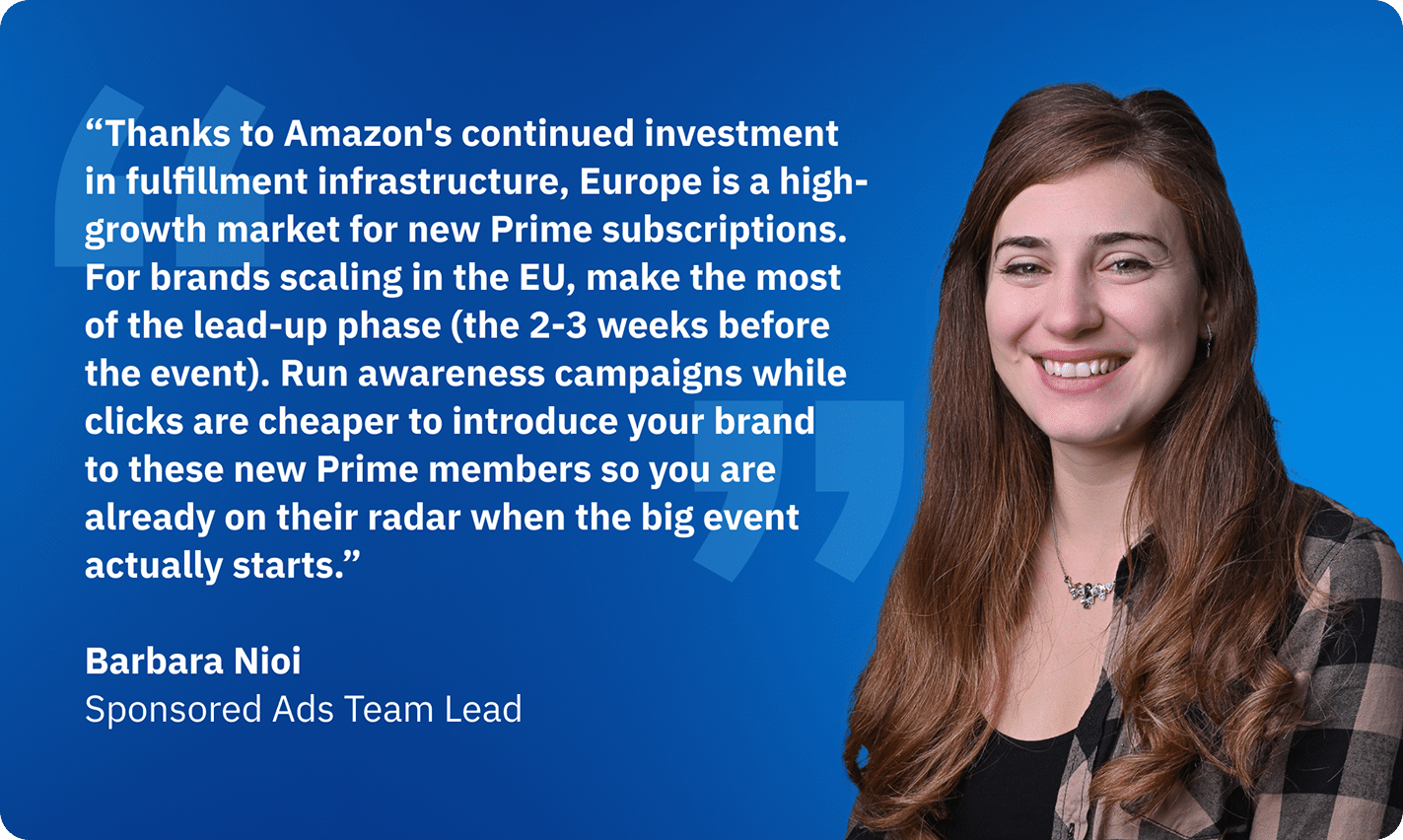
- EU Market (The Growth Engine): Thanks to Amazon’s continued investment in fulfillment infrastructure, Europe is a high-growth market for new Prime subscriptions. For brands scaling in the EU, make the most of the lead-up phase (the 2-3 weeks before the event). Run awareness campaigns while clicks are cheaper to introduce your brand to these new Prime members so you are already on their radar when the big event actually starts.”
3. The Performance Tool: Total Business Impact
A successful Prime Day isn’t just about high-intent deal items; it’s about how the entire catalog contributes to your bottom line.
Peterson Njagi, Sponsored Ads Account Manager:
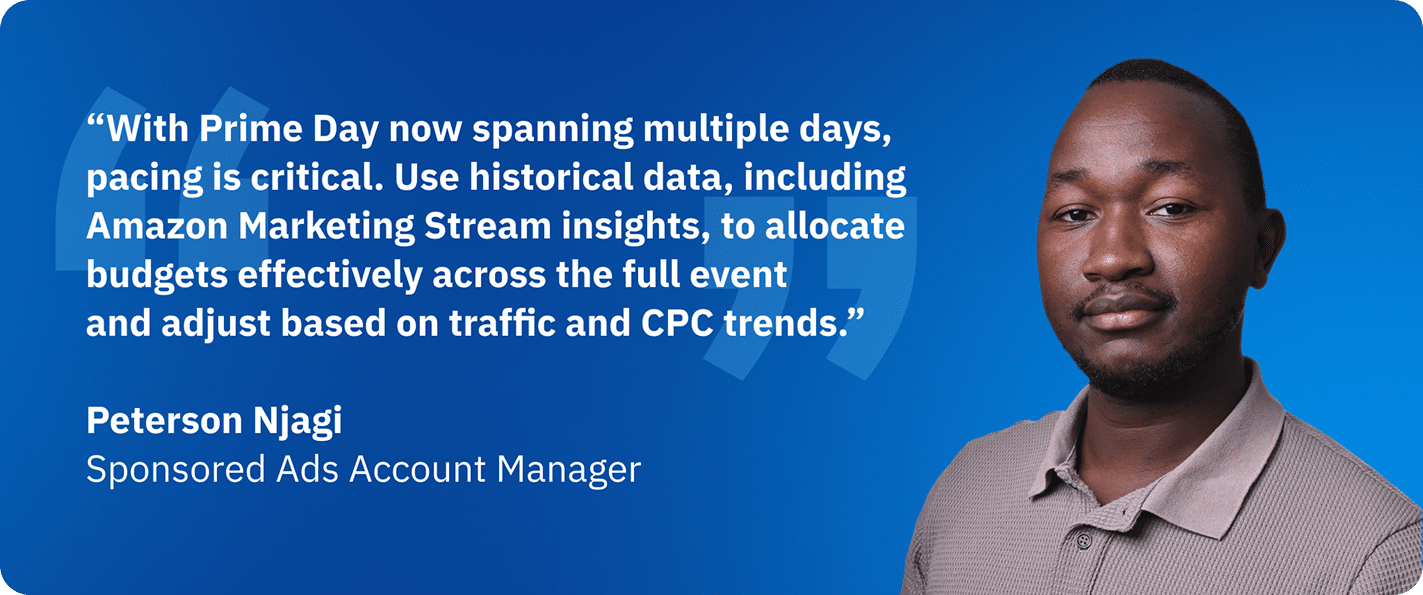
“To maximize Prime Day performance, prioritize spend on products that are on deal. These items attract the highest shopper intent, and strong investment helps secure visibility and defend against competitors during peak traffic. At the same time, don’t completely pause non-deal items. Even during deal periods, unique full-price products continue to convert. A minimal, controlled budget here helps maintain visibility and supports ongoing growth through steady traffic and detail page views. When measuring success, look beyond ad-only metrics like ACOS or ROAS. Focus on total business impact-Total ACOS (TACOS) or Total ROAS-to ensure you’re driving overall revenue efficiently, not just ad performance. Finally, with Prime Day now spanning multiple days, pacing is critical. Use historical data, including Amazon Marketing Stream insights, to allocate budgets effectively across the full event and adjust based on traffic and CPC trends.”
4. The Precision Tool: AMC and Retargeting
To bridge the gap between the Day 1 “browsers” and the Day 3 “buyers,” our DSP team utilizes advanced data mapping.
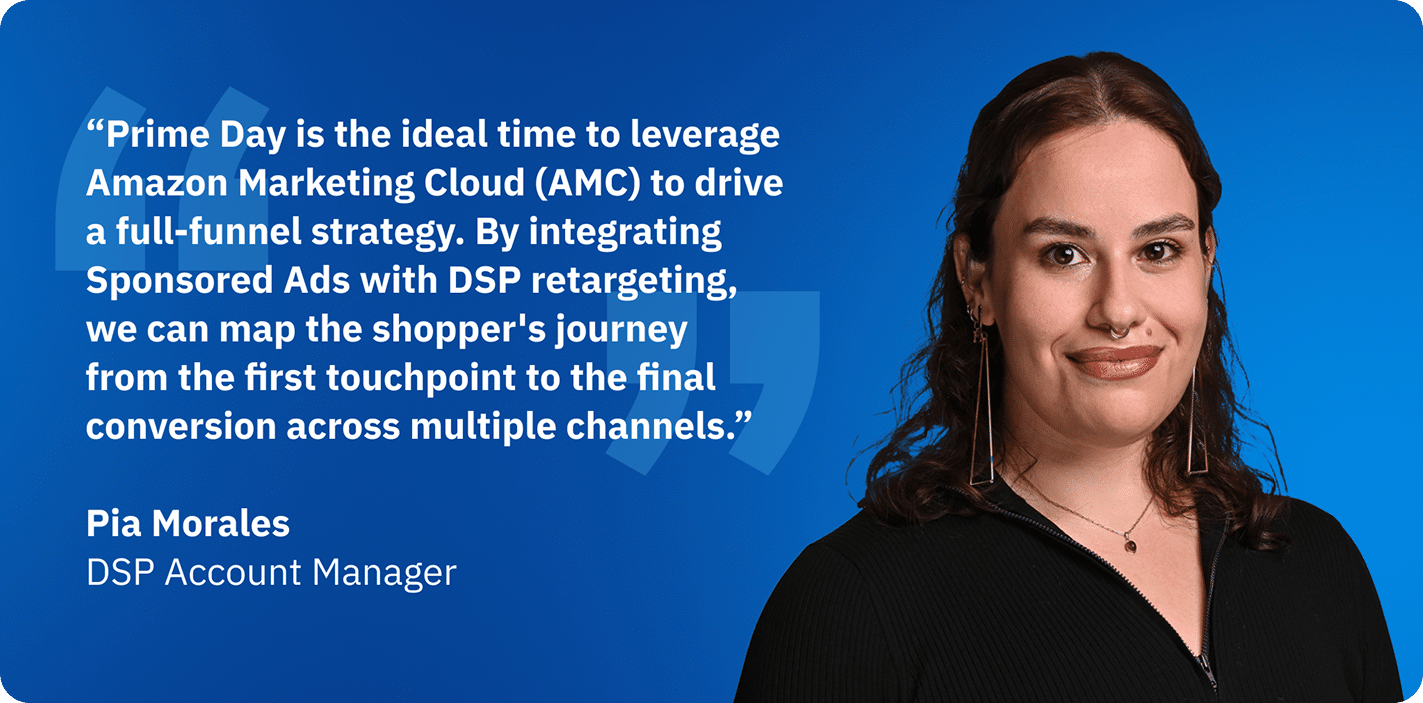
Pia Morales, DSP Account Manager:
“Prime Day is the ideal time to leverage Amazon Marketing Cloud (AMC) to drive a full-funnel strategy. By integrating Sponsored Ads with DSP retargeting, we can map the shopper’s journey from the first touchpoint to the final conversion across multiple channels. This allows us to re-engage past purchasers and capture new customers who stalled mid-funnel during a high-traffic window. To maximize efficiency, budget pacing should be strategically scaled by maintaining a conservative yet consistent presence during the lead-up period, then aggressively pivot to high-visibility bidding during the event’s most competitive days.”
5. The Operational Foundation
From a Vendor/Seller management perspective, the most devastating losses often stem from simple, preventable issues rather than complex strategic shifts. Our Senior Selling Partner Account Manager, Jonatan Lukac, breaks down the essential risk-prevention checklist to ensure your brand is active, compliant, and ready for the Prime Day peak:
“Preparing for Prime Day is often less about complex strategy and more about getting the fundamentals right. In our experience, the biggest losses don’t come from major failures but rather from simple, preventable issues. From an SPS perspective, success comes down to risk prevention:
- Ensuring all listings are accurate, active, and compliant
- Submitting all required documentation on time
- Confirming inventory is shipped and delivered ahead of key deadlines
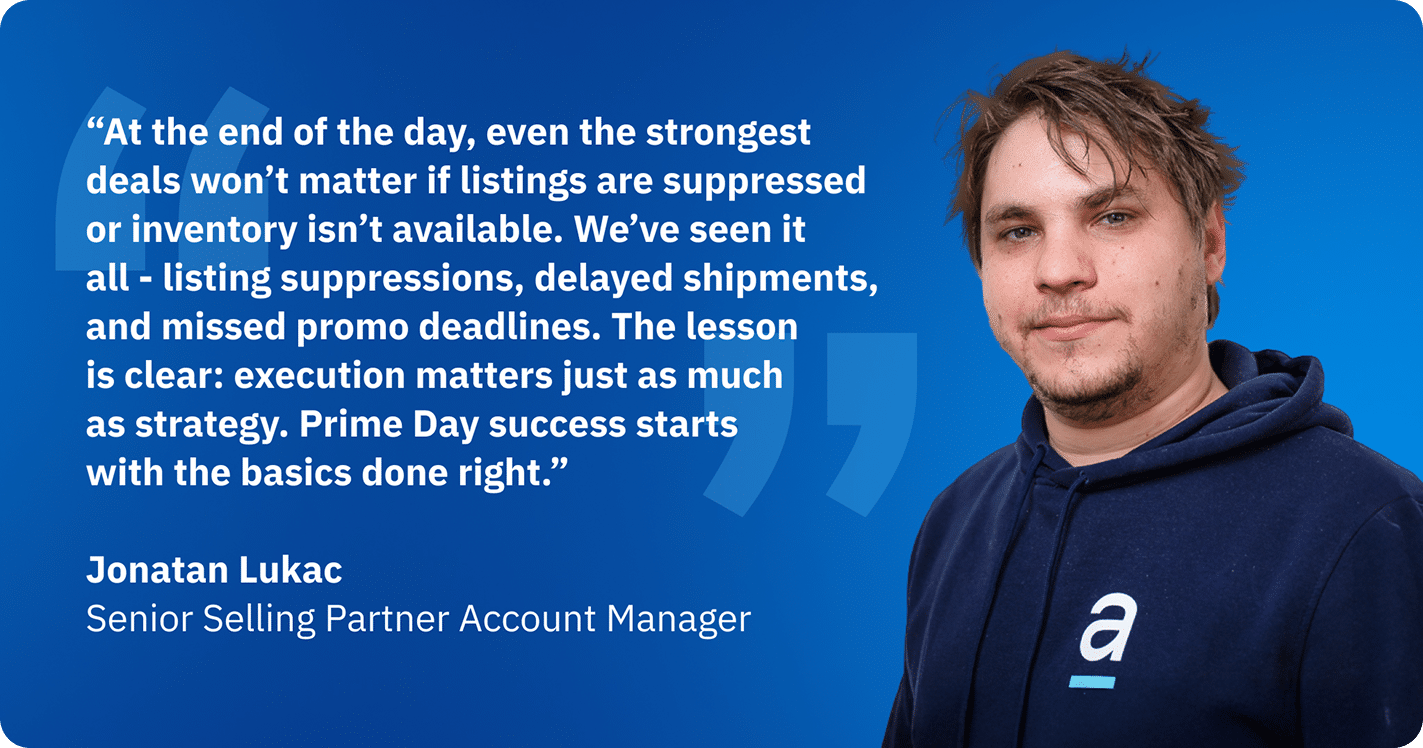
At the end of the day, even the strongest deals won’t matter if listings are suppressed or inventory isn’t available. We’ve seen it all – listing suppressions, delayed shipments, and missed promo deadlines. The lesson is clear: execution matters just as much as strategy. Prime Day success starts with the basics done right.”
Is your brand Prime Day ready?
With major shifts on the horizon – including a confirmed move to June 2026 for many major markets – the time to execute your lead-in strategy is now.
Reach out to Amerge to fine-tune your 2026 Prime Day strategy at hello@amerge.com, or fill out our contact form.