

The digital advertising ecosystem has undergone a profound structural transformation, driven by the deprecation of third-party cookies and the ascendancy of retail media networks. Within this landscape, Amazon is offering its sophisticated advertising infrastructure to “non-endemic” brands (companies) operating in sectors such as gaming, automotive, financial services, insurance, entertainment, universities or travel that do not sell physical products on the Amazon marketplace. Leading up to Prime Day, the traffic peak of H1, non-endemic advertisers have a massive opportunity to leverage high traffic and deterministic targeting.
Architecting the Audience: Targeting Capabilities
“The core value proposition for non-endemic brands lies in Amazon’s profound understanding of consumer life stages and immediate purchasing intent. Because Amazon possesses over a decade of first-party purchase and behavioral data, allowing it to infer lifestyle changes and consumer intent with a high degree of accuracy.“ – Marian Holenka Senior DSP Account Manager
On the Amazon you are able to find your audience targeting within several distinct pillars, allowing brands to transition away from proxy-based targeting toward deterministic, commercially verified behavior.
Here is a breakdown of the Amazon DSP targeting options, custom audience capabilities, and available inventory for non-endemic brands:
Pre-Built Audiences Available Amazon DSP offers several core pre-built audience segments powered by deterministic first-party data:
- In-Market (IM): Targets high-intent shoppers who have recently browsed or considered products in specific categories, such as “in-market for educational supplies” or “in-market for auto accessories”.
- Lifestyle (LS): Aggregates shopping and viewing behaviors to reach broad interest groups, such as “Sports Enthusiasts,” “Food lovers,” or “Outdoor Enthusiasts” and many more.
- Demographics: Target users based on standard attributes like age, gender, demographic signals such as household income, parental status, household composition and many more to scale campaigns or set baseline qualifications.
- Entertainment preferences: Reaches users based on streaming activities and preferences on platforms like Prime Video, Twitch or Kindle books, like for example type of books / movies / tv shows / games preferences.
- Third-Party (3P) Audiences: Advertisers can also seamlessly access thousands of segments from external branded data providers directly within the DSP to complement Amazon’s native data.
Custom Audience Creation Beyond pre-built segments, non-endemic brands can engineer highly granular custom audiences:
- Custom Build: Brands can securely upload their own hashed audience data or use an Amazon Ad Tag to retarget past visitors. This allows us to reach interested shoppers and guide them from awareness through consideration, ultimately converting them according to your specific goals. Additionally, by creating audiences based on loyalists or those already familiar with your brand, we can exclude these segments to focus exclusively on new prospects. This ensures your budget is dedicated to driving true incrementality.
- Prime Video Audiences: Target viewers based on their streaming behaviors across specific movies, TV series, or broader genres. You can further refine your reach by building custom “entertainment affinity” audiences mapped to exact titles and related talent interests
- IMDb Audiences: IMDb audience segments can incorporate engagement with movie, TV, and entertainment related content on IMDb.
- Twitch Audiences: You can target users who have streamed specific gaming category, Twitch engagement audiences or broader content genres on Twitch.
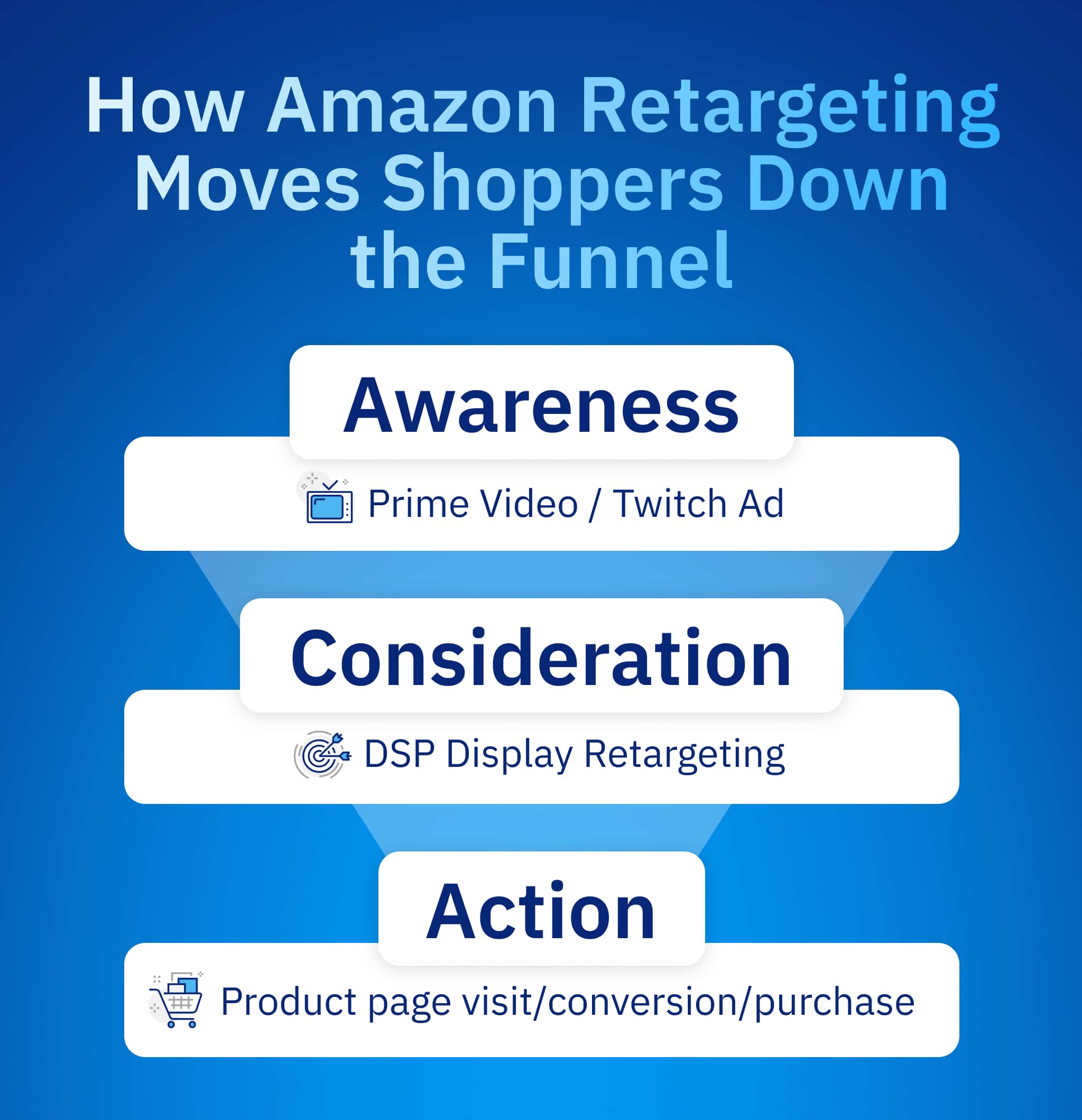
Retargeting: Nurturing Brand Awareness into Consideration and Action
Additionally, Amazon’s ecosystem allows for sophisticated sequential messaging by enabling advertisers to create custom, rule-based audiences of users who have already been exposed to your upper-funnel campaigns. For example, if a prospect views your brand’s video ad on Prime Video or Twitch, you can capture that specific ad-exposed audience and systematically retarget them with consideration focused campaigns, such as DSP display ads. This cross format retargeting ensures you are continuing the conversation with engaged prospects, effectively nurturing them down the funnel from initial awareness to active consideration.
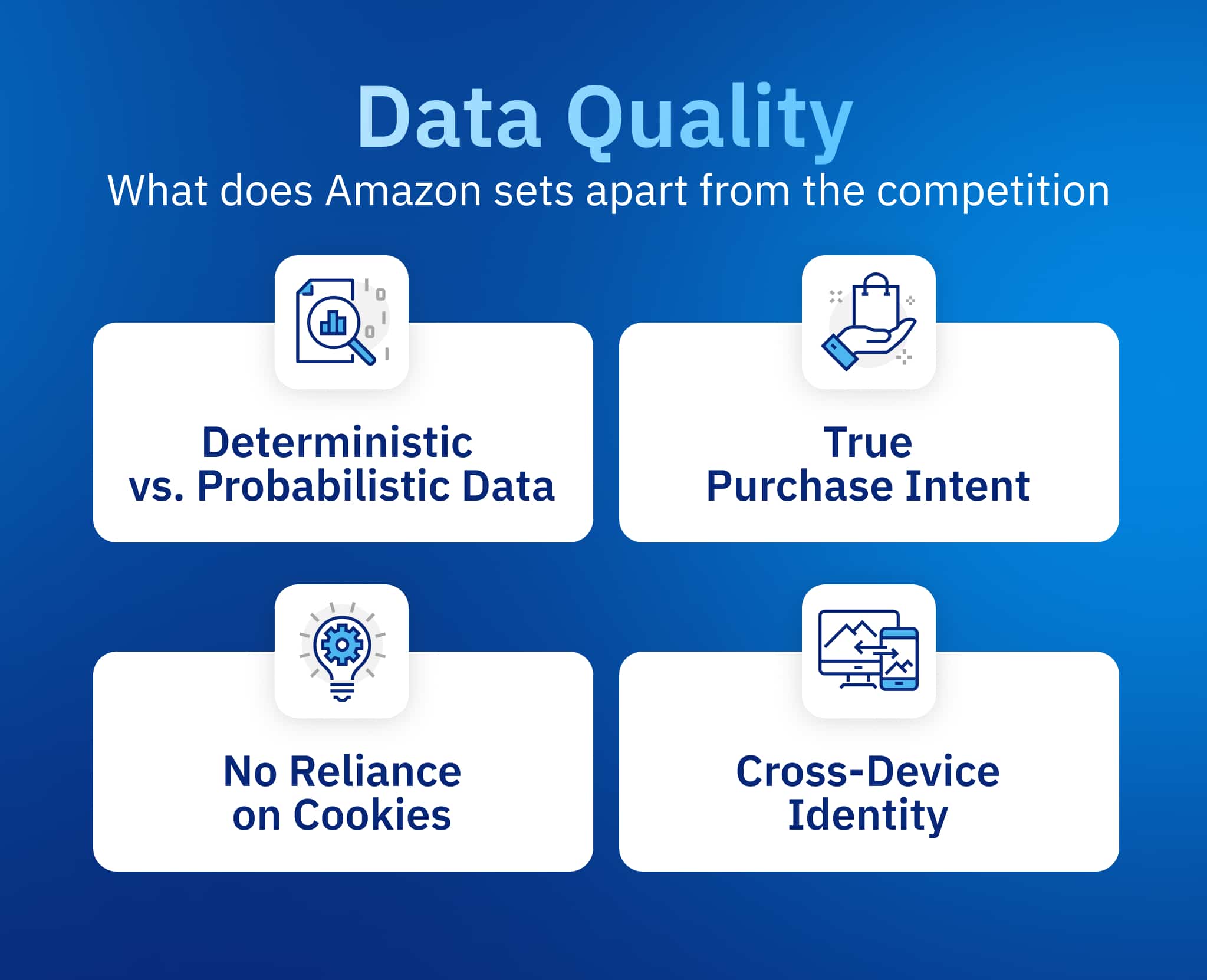
Data Quality: What does amazon set´s apart from the competition
While other platforms offer highly efficient Cost Per Click (CPC) metrics, they require complex, delayed attribution modeling to prove value. Amazon provides an environment where the user is already in an active, primed-to-purchase psychological state, elevating the intrinsic value of every ad impression. What sets those data apart:
- Deterministic vs. Probabilistic Data: Other platforms use third-party data providers and models to infer what a user might be interested in. Amazon knows exactly what millions of users browse, search, and buy.
- True Purchase Intent: Amazon’s “In-Market” audiences capture users who have actively demonstrated buying behavior for specific categories, rather than just reading about them on a blog.
- No Reliance on Cookies: Because Amazon targets users based on their logged-in ecosystem, their targeting are less dependent on third-party cookies due to Amazon’s authenticated ecosystem and first-party identity signals
- Cross-Device Identity: Amazon has household-level identity and stable device graphs, helping advertisers reach audiences across devices with a more unified household-level view.
Premium Inventory and Placements
Amazon’s non-endemic media portfolio extends far beyond digital retail display, offering a vast array of Owned & Operated (O&O) and off-platform inventory.
Through the DSP, non-endemic brands can purchase highly coveted streaming television placements on Prime Video and Freevee, including live events. This inventory merges the emotional resonance of linear television with the precision of deterministic targeting. Additionally, brands can purchase interactive video placements on Twitch or also native display units across Fire TV interfaces and Kindle devices. Amazon DSP also continues expanding access to premium streaming inventory through select third-party publishers and connected TV partnerships such as Disney+ or Netflix.
Real World Applications Across Industries
To see this framework in action, it is important to recognize that Amazon’s deterministic signals can drive real world outcomes for virtually any brand outside the traditional retail space.
Whether it is a university geotargeting prospective students for local Open Days based on in market textbook purchases, a video game publisher expanding title awareness to Twitch viewers who are actively shopping for PC components, or a movie studio driving localized opening weekend ticket sales through IMDb engagement, the applications are boundless. From automotive and travel to financial services and insurance, any nonendemic brand can leverage this traffic and targeting to reach high intent audiences.
Ultimately, this proves the new reality of digital advertising. For these brands, Amazon’s ecosystem is no longer just a retail channel. It has evolved into a highly sophisticated, full funnel engine for precise, incremental growth.